
For the Women.
Related Posts
Food is the bridge to connection at Christmas
Christmas for me has always been about connection. And food has always been the bridge. I love this time of year, all the chatter about who’s bringing what on Christmas Day, the shared planning, the anticipation. Food naturally pulls us together. Being animal-based gives us a chance to bring something meaningful to the table, and to make it a little festive too. This year, Marty and I are both heading to a family lunch. We’re bringing a roast leg of lamb, slow-cooked with garlic and rosemary. It’s one of my favourite meats, because it really is the gift that keeps on giving - hot on the day, then cold the next. We’ve grown used to eating cold meat, without bread, just adding some pickle or some kraut. Delicious. Shared meat has always brought humans together. Our family knows how we choose to eat, and it’s always a conversation starter. We both look and feel healthy, and that opens the door to good discussions; sometimes curious ones. Sometimes lively ones - especially when there are vegetarians around. And that’s okay. Our food becomes a conversation starter, a subject for debate, a path towards connection. Sharing food from the same platter is what humans do. For most of our history, celebration and feasting went hand in hand.When there was something worth marking - a successful hunt, a season of abundance, a gathering of family - people didn’t pick at plates or try to balance things out. They ate well. Together. Meat was central, not because of trends or rules, but because it was the most valuable, nourishing food available. It took effort to source and prepare, and that effort made it meaningful. Feasting wasn’t reckless; it was intentional. Christmas carries that same energy. It’s a pause in the year. A moment to gather, to rest, to reconnect. And historically, moments like that were always marked with abundance, not restraint. Somewhere along the way, especially in our summer Christmas culture, we swapped feasting for keeping things light. Plates full of salads, breads, and sweet treats that look festive, but often leave us unsatisfied. Grazing all day, crashing later - still searching for something. An ancestral banquet is different. It’s generous cuts of meat.Food that anchors you.A table that invites people to sit, slow down, and actually eat, not just snack between conversations. This doesn’t mean heavy or complicated. It means intentional. Choosing foods that truly nourish the body, so you can enjoy the day without crashes, cravings, or that familiar Boxing Day regret. Our bodies still recognise what a feast is. And Christmas is one of the few moments left in the year when we have the time to eat together, linger at the table, and leave feeling satisfied, both physically and emotionally. So, if your Christmas table looks a little more meat-heavy this year, you’re not doing something extreme. You’re doing something very old. Very human. A celebration deserves real food.A gathering deserves abundance.And Christmas deserves to feel as good as it looks. Christmas Eating FAQs Do I have to be strict on Christmas Day? No, and that’s not the goal. Animal-based eating isn’t about white-knuckling your way through Christmas. It’s about staying anchored in foods that nourish you most of the time, even on special days. Start with meat. Eat until you’re satisfied. From there, you get to choose — without guilt or urgency. One day doesn’t undo anything, and Christmas isn’t a test of discipline. It’s a celebration. Isn’t animal-based eating too heavy for a summer Christmas? Heavy isn’t about meat; it’s about unstable blood sugar. Protein and fat are actually what keep energy steady in the heat. Most people feel worse after a “light” Christmas of salads, bread, and sugar because they’re constantly grazing and crashing. A meat-centred plate keeps you satisfied, clear-headed, and able to enjoy the day, without needing to eat every hour. What if my family doesn’t eat this way? That’s okay, they don’t need to. You don’t have to convince, explain to, or convert anyone at the Christmas table. Often, the simplest approach is to quietly fill your plate with the foods that work for you. If you’re hosting or bringing a dish, make it generous and delicious. Let the food speak for itself. Connection matters more than agreement. What about Christmas desserts? This is where intention beats rules. If you’re well-fed on meat and fat, dessert becomes a choice, not a compulsion. Some people skip it entirely and feel great. Others enjoy a small amount and move on. There’s no prize for deprivation and no benefit to guilt. Eat in a way that lets you enjoy the day and how you feel afterwards. What if I “fall off” over the holidays? You haven’t failed, you’re human. One meal, one day, or even one week doesn’t erase anything. The most animal-based thing you can do is return to nourishment without drama. No punishment. No restriction. Just real food, again. The body responds very quickly when you give it what it needs. A Final Christmas Reminder Animal-based eating at Christmas isn’t about perfection.It’s about presence, nourishment, and staying connected to yourself and the people around you. Eat the meat. Enjoy the day. Let Christmas be Christmas.
Learn moreNourishing the whole body
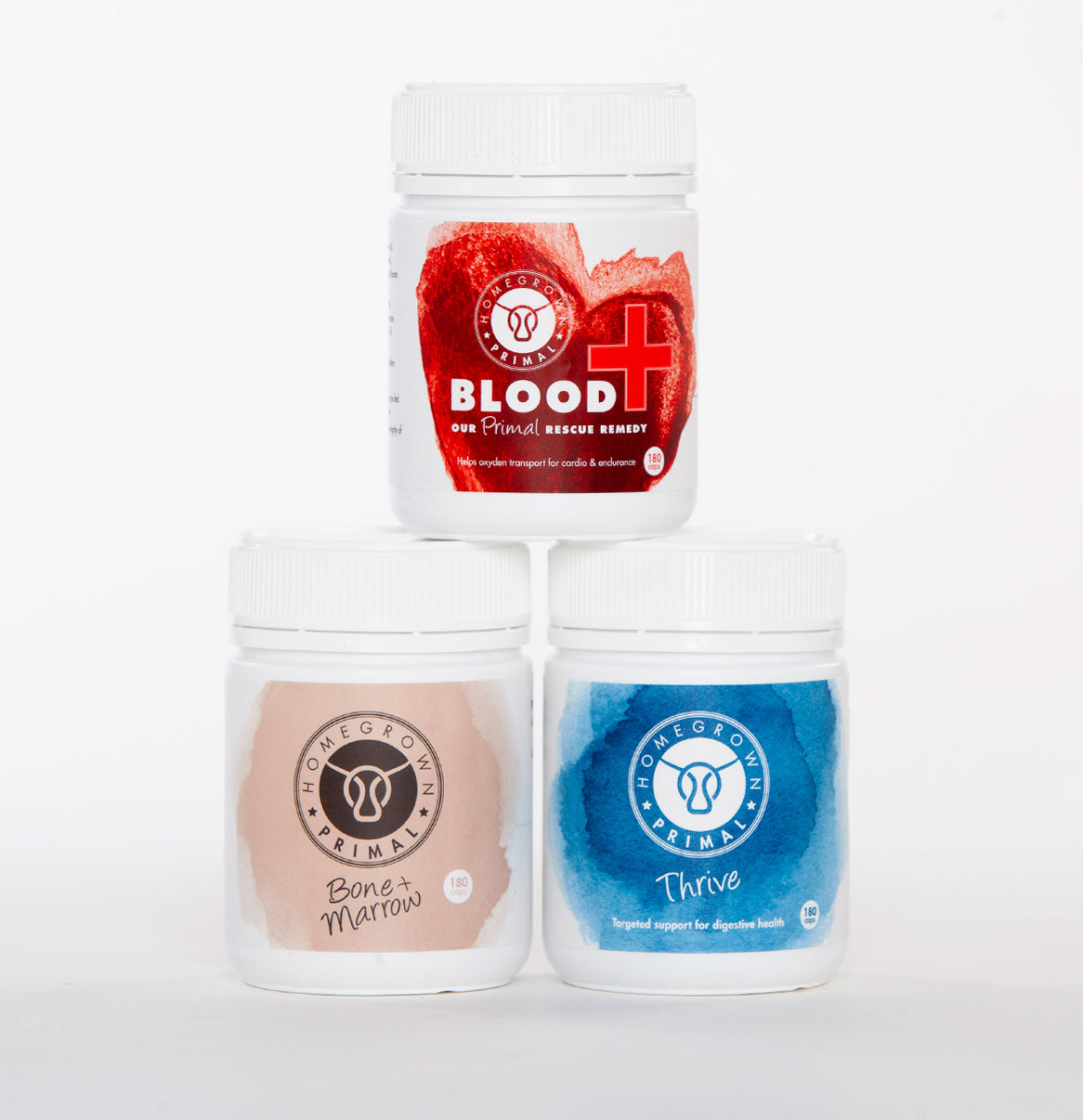
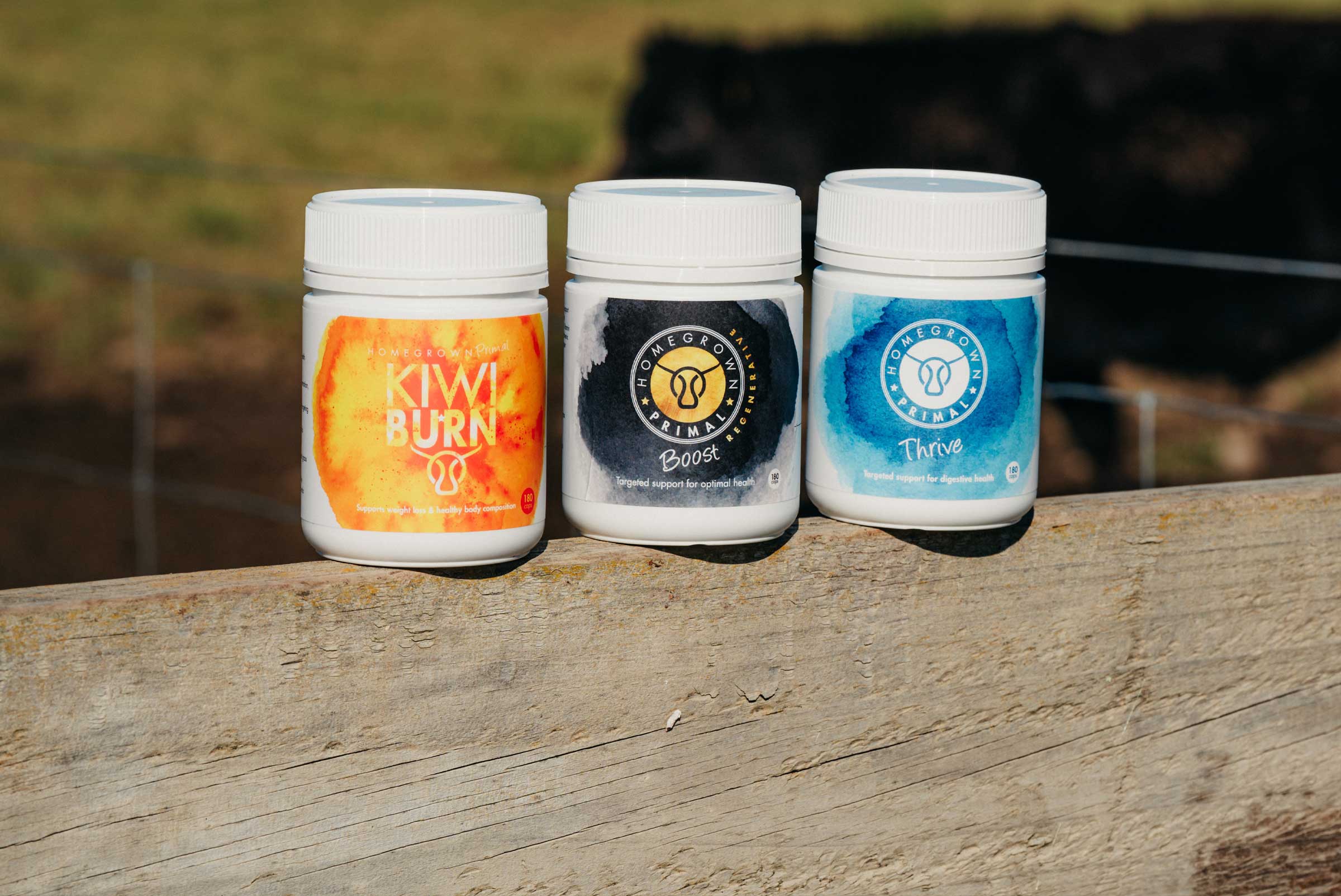
Your body doesn’t heal in isolation. Nothing in the body works on its own. Each system is connected, constantly supporting and responding to others. When we look at nourishment through this lens, it changes how we think about food and supplements. Instead of isolating one nutrient or trying to fix one thing at a time, we start paying attention to how the body functions as a whole. This is how we’ve always approached nutrition at Homegrown Primal. When you look at an animal in its entirety, you see the same interconnections. Bone and marrow provide foundational fats and minerals. Organs are dense with vitamins and cofactors. Muscle supports strength and structure. Liver, for example, is incredibly nutrient-rich, yet the amount the body actually needs is relatively small, roughly the equivalent of 100g of raw liver a week. It’s not about more. It’s about balance. That way of thinking naturally carries through to how we approach our products. Pairing Is Caring One of the most common questions we’re asked is which of our products work best together. It’s a fair question because modern nutrition can often feel overwhelming, especially when you’re run down or short on time. Our bundles exist to simplify that decision. Every pot or blend in a bundle has been chosen for a reason. We look at how the body absorbs nutrients, how systems connect, and what tends to be missing when someone is depleted, low on energy, or just not feeling quite right. The goal is simple: support the body in a way that makes sense, because when nutrients work together, the body responds. The Iron Bundle Take iron support, for example. It isn’t just about iron on its own. It’s about absorption, balance, and supporting the systems that help the body actually use it. That’s why the Iron Bundle combines Blood+, Thrive, and Bone + Marrow. Together, they support iron stores, energy, and overall strength in a way that takes the guesswork out of what to take when. The Gut Bundle The same thinking applies to gut health. Digestive issues are rarely one-dimensional, so our Gut Bundle reflects that reality. By pairing South Island raw, organic colostrum powder with Bone + Marrow and Thrive, the focus is on nourishment, repair, and daily support. Because when the gut is supported, other systems begin to settle too. The Wellness Bundle Feeling a bit off or a little run down is often a sign that the body needs broader support. The Wellness Bundle is designed to support the cardiovascular system through the gut, because that’s where everything starts. And as always, real food matters too. Adding liver alongside this bundle can make a real difference. Making Nourishment Simpler At the end of the day, these bundles are simply there to make things easier. They’re built for consistency, not perfection. When supplements are paired thoughtfully, routines feel manageable rather than rigid, especially at this time of year when work, family life, and holiday commitments fill up our days. Have a look through our bundles here and see what feels right for where your body is at right now. There’s no rush, just support when you need it.
Learn moreLearning to love your gut
How many people do you know dealing with gut issues like IBS, reflux, bloating, or who need to sprint to the loo after a meal? If you’re experiencing any of these symptoms yourself, or someone close to you is, you’re not alone, and you’re certainly not weak. You’re simply running a high-level biological system on low-quality fuel. The truth is your gut is a powerhouse. It contains a vast neural network (often called the second brain) that works nonstop to turn food into energy, hormones, neurotransmitters, and muscle-building nutrients. When that system is supported properly, digestion feels calm and predictable. But when it’s constantly irritated, your whole body pays the price. Why A Species-appropriate Diet Matters Humans evolved as apex predators and opportunistic scavengers, with stomach acid that stayed fiercely acidic for one purpose: to digest animal foods effectively. While our microbiome can adapt to many dietary patterns, the fundamental design of the human digestive tract hasn’t changed. That’s why I recommend a species-appropriate approach to eating: Animal-based foods as the foundation Fermented foods as intelligent additions Minimal industrial inputs We don’t fix digestion by adding powders, fibres, or ultra-processed fake “health foods”. We fix it by not feeding the gut foods it never evolved to tolerate. Research consistently shows the digestive and metabolic advantages of animal-based diets. Their capacity to improve nutrient absorption and digestive efficiency compared to diets heavy in plant defence chemicals and lectins. Lindberg (2016) describes the digestive advantages of a carnivorous template, especially around absorption and gut workload. Buchinger & Ceballos (2017) highlight the microbiome stability and gut-health benefits seen with animal-based eating patterns, compared to plant-dominant diets that commonly aggravate digestion. On a population level, higher intake of quality animal foods correlates with lower mortality from major chronic diseases, reinforcing the protective role of animal protein and fat in human health (Micha et al., 2017). The Industrial Spray Problem (and why your gut feels it) Glyphosate-based herbicides are used widely on staple crops, and that usage has risen sharply over the last few decades. Benbrook (2016) documents this global surge and the resulting presence of glyphosate residues in everyday foods. Why does that matter for digestion? Because your gut lining and microbiome are sensitive ecosystems. Constant exposure to chemical residues is a modern pressure your body has never had to navigate. Even regulatory reviewers acknowledge the ongoing debate around glyphosate’s impact on human health (Monsanto Company, 2019). And glyphosate doesn’t just sit harmlessly on plants. Zobiole et al. (2010) show that glyphosate alters plant physiology and nutrient dynamics, meaning residues entering the food chain may also change what we absorb and how our gut responds. So if your digestion feels chaotic, sensitive, or inflamed, it’s not random. Your gut is reacting to a modern food environment that’s out of alignment with human biology. What To Do This isn’t about fear. It’s about returning to what works. To support a strong, stable and resilient gut: Eat an animal-based diet that your body can digest cleanly. Prioritise foods that are simple, unprocessed, and unsprayed. Use fermented foods to populate your gut with beneficial bacteria. Cut back on foods that trigger symptoms; listen to your body, it’s giving you the data. You don’t need to fight your gut. You need to feed it like the biological masterpiece it is. FAQs: Is Your Gut Trying to Tell You Something? What causes leaky gut? Leaky gut happens when the intestinal lining gets inflamed, and its tight junctions (your gut’s “security gates”) loosen. This can allow particles that should stay in the gut to cross into the bloodstream and trigger immune reactions. Common contributors include: Ultra-processed foods Industrial seed oils Chronic stress Excess alcohol Food intolerances Chemical residues in food The good news: when the gut is fed species-appropriate foods, and inflammation reduces, the lining can repair itself. Your body wants to heal; it just needs the right environment. Should I be taking probiotics or digestive supplements? Possibly, but they shouldn’t form your foundation. Supplements can offer temporary support, but they won’t override a diet that keeps irritating your digestive system. Think of them like the scaffolding, not the building. Healing should start with food first: Animal-based meals you can easily digest Simple, unprocessed natural ingredients Fermented foods (if you tolerate them) Then, if needed, you can add targeted support like digestive enzymes, minerals, or specific strains of probiotics. Why do “healthy” foods like vegetables, grains, or legumes upset my stomach? Because “healthy” doesn’t always mean human-appropriate. Many plant foods contain defence chemicals, such as lectins, oxalates, phytates, and FODMAPs, that can irritate the gut lining or ferment aggressively in sensitive people. If you get bloating, gas, cramps, reflux, or urgency after consuming certain plants, your body isn’t being dramatic; it’s giving feedback. Sometimes the best gut reset is less variety and more digestibility. What are the signs my digestion is improving? Less bloating after meals Smoother, more regular bowel movements No urgent trips to the toilet A calmer, more settled belly throughout the day Better energy and mood stability Fewer cravings for sugar or heavy carbs Improved digestion is a sign that your entire nervous system is calming down. Digestive health is full-body health. So, look after your gut, and it will look after you, too.
Learn more