Why men and women carry pressure differently, and the small daily habits that help.
It’s Mental Health Awareness Week here in Aotearoa, and I want to talk about something that comes up again and again in the emails and phone calls I get from you.
Men and women feel the pressure of life differently. Not better or worse, just differently. It comes down to the roles we carry, the hormones running through us, and how we manage the daily load. When you understand which of these is weighing on you, it gets a lot easier to do something about it.
The roles we carry
For a lot of men, the message is still “don’t look weak”. Brené Brown found this in her research on shame: men live under constant pressure not to be seen as struggling. So they push through, go quiet, and keep it to themselves.
Here in New Zealand, one in five men say they don’t prioritise their mental health at all, compared with around one in eight women.
For women, it often looks like the mental load. Work, kids, the household, ageing parents, everyone’s birthdays. She holds it all together, and puts herself last.
Different roles, same result: running on empty without noticing until the tank is dry.
As Brené Brown puts it, “Shame derives its power from being unspeakable.” The first step, for all of us, is saying it out loud.
Breaking the loop
You know the feeling. Lying awake replaying a conversation. Running the same “what if” over and over.
Psychologist Susan Nolen-Hoeksema spent her career studying this kind of looping thought, called Rumination. She found it’s strongly linked to low mood, and that men and women tend to handle it differently. Her summary: “Women think and men drink.” Women are more likely to loop. Men are more likely to numb it, often with alcohol, because sitting with your thoughts doesn’t fit the “harden up” script.
Neither gets us out. Here’s what does:
-
Name it. Simply saying “I’m looping again” puts a little space between you and the thought.
-
Get into your body. A brisk walk, cold water on your face, a few slow breaths.
-
Write it down. Once it’s on paper, your brain can stop holding onto it.
-
Give worry a time slot. Ten minutes, then park it until tomorrow.
-
Say it to someone you trust. Thoughts shrink when they’re shared.
-
Get outside. Morning light and nature are some of the simplest resets we have.
Hormones: the chemistry behind the mood
Our hormones shape how we feel more than most of us realise.
For women, the shifts come in seasons: the monthly cycle, pregnancy and breastfeeding, and perimenopause. That last one is a big one. A 2024 study from University College London found women in perimenopause are around 40% more likely to experience depression than before this stage, as oestrogen and progesterone start to fluctuate. The good news is the risk eases again after menopause. If you’re in this season and feel unlike yourself, you’re not imagining it, and you’re not alone.
For men, testosterone plays a role in drive, confidence and motivation, and it naturally declines with age. Stress, poor sleep, alcohol and a low-nutrient diet don’t help.
For both of us, hormones are built from raw materials. Protein, healthy fats, vitamins and minerals are what your body has to work with. Steady blood sugar, good sleep and strength training all help keep things on an even keel.
Work-life balance: habits of people who stay well
Gabor Maté has spent decades writing about how hidden stress shows up in the body. His message is simple: if we don’t learn to say no, our bodies will eventually say it for us. He also reminds us that “Health rests on three pillars: the body, the psyche and the spiritual connection.”
Some signs the balance has tipped: you’re always “on”, there’s no real downtime, the hobbies have quietly gone, and your fuse at home is shorter than it used to be.
The people I see staying well tend to share a few habits:
-
Consistent sleep and wake times
-
Morning light and movement before screens
-
Protein-first meals and real food over processed
-
A clear work cut-off and a screen-free wind-down
-
Time outdoors, and something that’s just for fun
-
Real connection with people, not just scrolling
I’ll be honest, routine didn’t click for me overnight. It was a gradual acceptance that a daily practice, including meditation, simply works for me. So don’t try all six this week. Pick one.
Food matters here too. In the SMILES trial, adults with depression who improved their diet quality over 12 weeks saw real results, with a third reaching remission compared with 8% in the comparison group. What we eat feeds how we feel.
Supporting each other through the hard times
If there’s one thing the research agrees on, it’s that we’re not built to do this alone. A review of 148 studies found people with strong social relationships had a 50% greater likelihood of survival, an effect comparable to well-known risk factors like smoking.
Supporting him: men often open up more side by side than face to face. Go for a walk, a drive, or work on something together. Ask once, then leave the door open.
Supporting her: listen before you try to fix it. Share the load in practical ways, and notice when she’s been running on empty.
For partners, mates and whānau, it can be as simple as asking, “How are you, really?” I often ask: ‘how are your inner worlds?’ and waiting for the real answer.
Built for her: Mojo
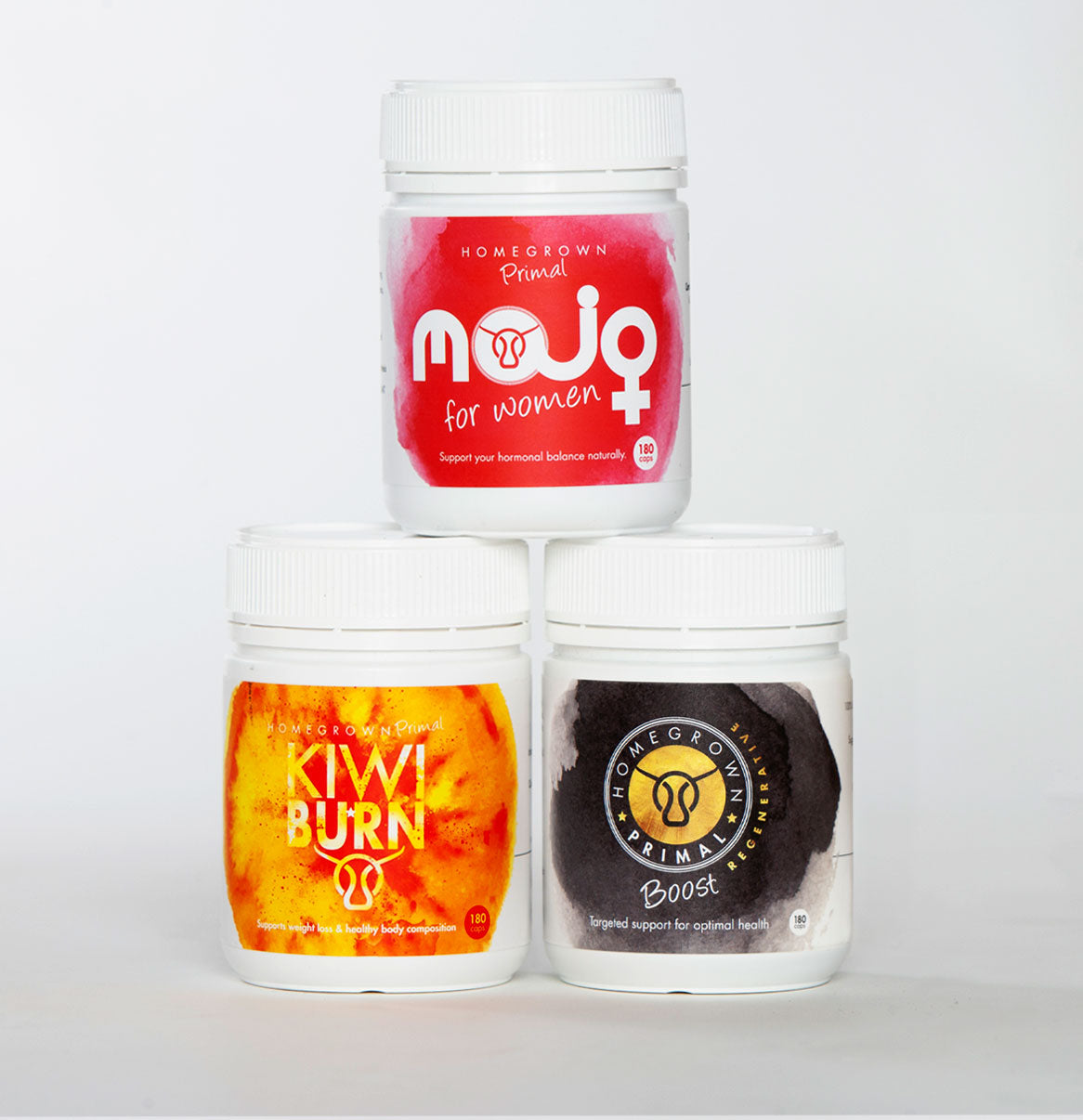
Mojo is our daily essential for women, made from regeneratively farmed NZ beef organs to support hormonal balance naturally, through every season of life.
Built for him: ManPower
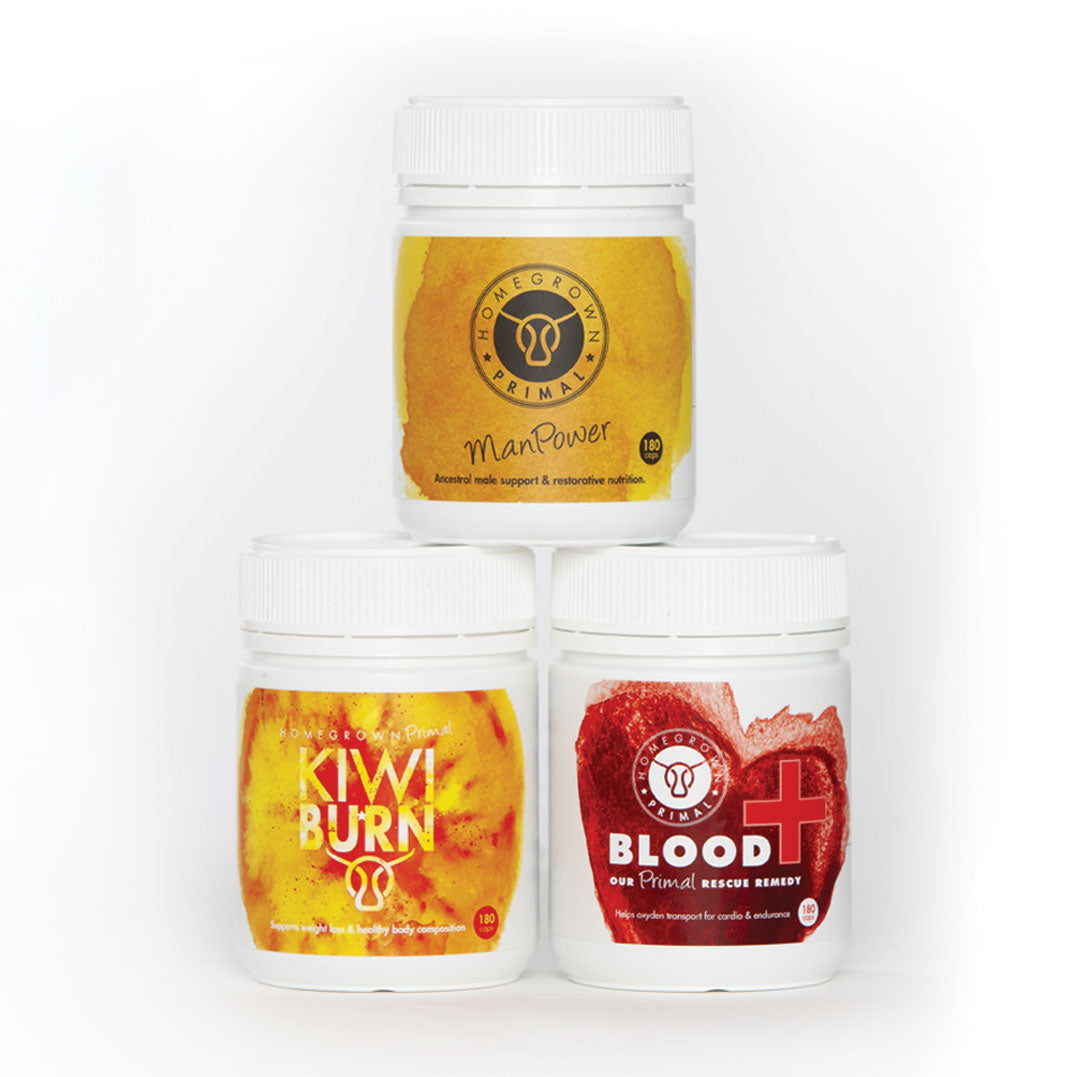
ManPower is ancestral male support and restorative nutrition, made from regeneratively farmed NZ beef organs for the men who keep showing up.
Reaching out matters most
Good food is one piece of the puzzle. It’s never a replacement for support. If you’re struggling, or someone you love is, please reach out.
Need to talk? Free call or text 1737, any time, to talk with a trained counsellor.
This week, check in on someone. It might be the most important thing you do.
Look after yourselves, and each other.
Janet
Founder, Homegrown Primal NZ
P.S. Know someone carrying a lot right now? Forward this to them.