Blog

What Is Your Food Really Costing You?
We invest in our homes, businesses and futures, but often forget the investment that underpins them all: our health. This blog explores why the cheapest food is not always the best value, how nutrient-dense meals can keep you fuller for longer, and why eating like our grandparents may be one of the smartest ways to nourish your body without overcomplicating your budget.
Learn more
If We're Eating Healthier Than Ever Before… Why Are We Getting Sicker?
We’ve been taught to eat “healthy” for decades, but many people are still tired, undernourished and struggling with their health. This blog explores why healthy and nourishing are not always the same thing, and why nutrient-dense foods like meat, eggs, seafood and organ meats deserve a place back on the modern plate.
Learn more
How to Stay Nourished as a Woman Through Every Season of Life
With so much nutrition advice aimed at women, it’s easy to feel confused about what your body really needs. This blog explores women’s nutrition through every season of life, from hormones and menopause to protein, healthy fats, metabolic health and the real, nourishing foods that help us feel strong, steady and confident as we age.
Learn more
Ancestral Tools and Why They Matter in the Modern Kitchen
The Knife: The Simplest Tool in the Kitchen Before blenders.Before aluminium pots.Before electricity. There was a sharp edge. The earliest known stone cutting tools date back roughly 2.6 million years (Oldowan tools, East Africa). They weren’t sophisticated instruments, just sharp flakes struck from stone. But they were enough. They allowed early humans to butcher animals, slice meat, and process plant foods. The tool was simple.The act was direct.Cut. Separate. Prepare. No motor. No containment. No transformation beyond what the hand could control. Cutting Came Before Cooking Vessels Archaeological evidence shows controlled use of fire by at least 400,000–1 million years ago. Pottery, appears much later, around 20,000 years ago in East Asia, and far more recently in many parts of the world. That means for the majority of human history, food preparation did not rely on pots. It relied on cutting, scraping, trimming, and roasting. The blade prepared the food before the fire touched it. Even where earth ovens were used, such as the hāngī in New Zealand, food was cleaned, opened, and portioned with cutting tools before being placed into the ground oven. Archaeological middens in New Zealand contain: Shells with clear cut marks Bird and fish bones showing butchery Obsidian flakes (mata) found near cooking sites Obsidian fractures into edges, sharper than many modern steel blades. Māori and other Pacific cultures used these flakes for filleting fish, and cutting flesh. Again, simple tool. Direct contact. The Blade Teaches Skill And Understanding A knife demands competence. You must know: Where the joint sits. Where the muscle separates. Where the bone ends. How the grain runs. A blender requires loading and pressing a button.A knife requires knowledge. The blade teaches anatomy. It teaches structure. It teaches patience. When you break down a fish with a knife, you see its architecture. When you portion meat by hand, you understand the muscle groups. You're not removed from the food. You're learning from it. The Blade Offers Choice Cutting is selective. You choose: What stays. What is trimmed. What is kept whole. What is sliced thin. What is left intact. Blending removes distinction. A blade preserves difference. Fat is fat. Lean is lean. Skin is skin. Each part can be treated according to its nature. Choice is physical and it happens at the fingertips. The Blade Represents Relationship This may be the most important piece. When using a knife: The food is unboxed, unwrapped, visible, and touched. There is proximity. You smell it. You feel resistance. You adjust pressure. Nothing separates your hand from the food except a thin edge of steel or stone. Across cultures, the blade has always symbolised provision and responsibility. In Māori culture, the toki (adze) represented authority, leadership, and capability. While primarily associated with carving and construction, stone cutting tools and obsidian flakes were also essential in food preparation. The person holding the blade determined how food was divided. That carries weight. Simplicity as Strength The knife does not: Plug in. Hum. Spin. Encase. It does one thing well. It divides with precision. And that precision matters. Research shows that food texture and structural integrity influence: Chewing time Satiety signalling Digestion rate Glycaemic response Whole pieces of food behave differently in the body compared to mechanically homogenised food. Structure changes function. The knife preserves structure. The Modern Kitchen Drift Today, food often arrives: Vacuum-sealed Pre-cut Pre-portioned Encased in plastic Or it is reduced to liquid before it is even eaten. We have gained convenience.But we have lost contact. The blade restores contact. It slows the process. It demands presence.It brings us back in contact with our food. The Argument, Clean and Simple The knife is humanity’s original food processor. It represents: Skill. Choice. Relationship. It keeps us physically close to the food.It preserves structure.It requires knowledge.It honours anatomy. It is simple.And simplicity is powerful.
Learn more
Why Most Health Routines Fail After 30 Days
I want to talk today about a pattern I see over and over again. Someone decides it’s time. New month. New plan. New supplements. New workout program. New diet. New rules. For 30 days, they’re all in. Then life catches up. The early mornings feel harder. The meal prep slips. The gym sessions shorten. The supplement routine becomes inconsistent. Motivation fades. And slowly, the whole thing unravels. Not because they lack discipline. But because they tried to change everything at once. Modern health culture encourages complexity. Stacks. Protocols. Biohacks. But our biology hasn’t changed. Our ancestors didn’t overhaul their lives every 30 days. They stuck to the fundamentals and repeated them. The Real Reason Health Routines Collapse Most routines fail because they’re built on intensity, not structure. When you overhaul: Your diet Your training Your sleep Your supplementation… all in the same week, you create friction in every area of life. And friction drains willpower. Your nervous system doesn’t love radical shifts. It loves rhythm. Health that lasts is built the same way strength is built. One repetition at a time. The Problem With “All or Nothing” The wellness industry rewards extremes. 30-day resets. Hard detoxes. Complete lifestyle overhauls. But humans struggle to sustain extremes. We sustain foundations. The people who feel strong in their 40s, 50s and beyond aren’t constantly restarting. They’ve built one base habit so solid it carries everything else. That’s the difference. A 3-Step Framework That Actually Lasts If your health routines keep stalling after 30 days, simplify. Here’s how: 1. Choose One Anchor Habit One. Not five. Not ten. One habit that feels foundational to your health. It could be: A glass of water when you wake up Eating a protein-rich lunch Taking your organ supplements daily Walking for 20 minutes after dinner Lifting weights three times a week Your anchor habit should: Be simple Be repeatable Support your energy Support your metabolism Support your resilience It should feel like a base layer, not an extra burden. For many in our community, that base layer is simply ensuring their nutritional foundations are covered every day. No guesswork. No complicated stacking. Just consistent nourishment. 2. Make It Your Foundation This is where most people go wrong. They treat habits as temporary projects. Instead, your anchor habit becomes non-negotiable. It’s not “when I feel motivated.” It’s not “when life is calm.” It’s your baseline. Think of it like brushing your teeth. You don’t debate it. You just do it. When your foundation is solid, everything else becomes easier: Energy stabilises. Cravings reduce. Training feels more supported. Focus improves. Foundational nutrition is often the quiet driver behind sustainable change. When your body receives what it actually recognises, it stops fighting you. That’s why we created Complete Beast, a simple, nose-to-tail foundation designed to support everyday nourishment without complexity. No synthetic stacks. No rotating protocols. Just whole-food organ support in one place. 3. Build From There and Track Consistency, Not Perfection Once your anchor habit feels automatic (usually 4–6 weeks), then you add one more layer. For example: Add strength training Or Meditation Improve your bedtime routine Limit screen time Or refine food quality But only once the base is stable. And when you track progress, don’t track perfection. Track consistency. Did you show up 80% of the time? That’s success. Health isn’t built in perfect streaks. It’s built in accumulated days. Small wins, stacked quietly. What Real Progress Looks Like It doesn’t look dramatic. It looks like: Fewer energy crashes Clearer thinking Stronger training sessions Better recovery Steady resilience Nothing flashy. Just stability. And stability compounds. That’s the philosophy behind modern ancestral nutrition. Simple inputs. Recognisable nutrients. Daily rhythm. Pure nutrition lasts because it’s consistent. Before You Start Another 30-Day Plan… Ask yourself: What is my one anchor? Build that. Protect it. Repeat it. Everything else can come later. Strength in simplicity always outlasts intensity. And your body will thank you for choosing consistency over chaos.
Learn more
The Power of Simplifying Your Diet
Why I Chose To Eat Animal-Based The reason I chose to live this way - eating pure, whole food - goes far beyond what’s on my plate. It defines how I live, how I care for my body, and how I think about health, longevity, and self-respect. This isn’t just about diet. It’s a conscious decision to step away from the noise and return to the things that actually sustain me. What Pure Food Really Means For me, pure food means real ingredients. We often say, “If it has more than three ingredients, it’s not real food.” And honestly, that feels spot on. Over decades, we’ve been seduced by the food industry into believing we can eat processed foods and still live long, healthy lives. Convenience replaced quality, and Marketing replaced the truth. Stepping outside that industry narrative and reclaiming purity as a non-negotiable has transformed my health. I’ve seen the same shift happen for many others on this path. My Family History Shaped My View Of Nutrition My mum was born in 1939. She lived through periods of scarcity, then abundance, much of it the wrong kind. She witnessed extreme dieting trends and the vilification of animal foods in the 1980s. She followed the advice she was given, trusted the so-called experts, and did what she thought was right. She’s now in her mid-80s and living with dementia, something I can’t help but link to decades of poor nutritional guidance. My grandmother, on the other hand, learned about food from her farming parents. Her nutrition was simple, grounded, and traditional. She lived well into her 90s and kept all her marbles right to the very end. That contrast isn’t lost on me. The Link Between Pure Nutrition And Longevity. I truly believe that pure nutrition lays the foundation for superior health and longevity. What we’ve lost over decades of industrialisation, government food guidelines, and Big Food corporations dictating what we should eat, is real nourishment. The result? Declining health across the population. Rising neurological issues in midlife. Accelerated physical decline in our seniors. This didn’t happen by accident. How Returning To Whole Foods Changed My Health Since returning to pure food, I feel the best I have in years. I’m lean. I’m fit. I’m pain-free. I’m mentally sharp. My cognition is clear. My energy is steady. I don’t feel any sense of decline in performance. I feel strong and resilient. This is what happens when you fuel your body with food it actually recognises. What Eating Pure Looks Like In Real Life Eating pure for me means choosing foods with one ingredient. Foods that aren’t engineered in factories; boxed, branded, or wrapped in plastic. There are no protein bars or cereal boxes in my cupboards. My food lives raw in the fridge or freezer. I eat minimally processed animal foods: meat, organs, dairy, eggs, with fermented foods occasionally. I listen to my body. When I’m hungry, I choose high-protein, nutrient-dense food that actually satisfies me. Pure Food As An Act Of Self-Respect Pure food is an act of self-respect. It’s listening to your body instead of overriding it. It’s choosing quality over convenience. It’s choosing nourishment over noise. Why I’ll Never Go Back I’ll never go back to eating badly. I’m here for good, fuelled by pure, highly nutritious food that keeps me alive, awake, and vibrant. Because pure nutrition lasts.
Learn more
The Benefits of a Carnivore Diet for Cardio Performance
When you’re training your cardiovascular system, it’s not just about aerobic volume or intervals. It’s about fuelling, repairing and sustaining the lifeline of your performance: your heart, lungs and blood. At Homegrown Primal, we believe that an animal-based approach provides deep targeted support, especially when you include organ blends that nourish tissues often overlooked. Why It Matters Your heart isn’t just a muscle; it’s a metabolic engine. It demands intense nutrient support: from saturated fats for mitochondrial resilience, to organ-derived compounds for cell repair and circulation. Your lungs and the oxygen-exchange system depend on cellular membranes, phospholipids, and clean vascular walls. Animal-based nutrients provide the building blocks of these vital structures. Your blood carries energy as well as immunity and recovery signals throughout your body. Supporting whole-blood health means we’re supporting cardiovascular capacity, endurance, and recovery. Ruminant Organ Advantage Our Heart & Lung and Blood+ products are designed to feed these systems directly: Heart & Lung delivers organ-derived tissue support, rich in peptides, which your cardiovascular system can use for resilience and efficiency. Blood+ provides nutrients geared toward red-blood-cell membrane integrity, haemoglobin function, and immune cell health, all critical for oxygen delivery, clearing waste, and regenerating tissue under cardiovascular load. What The Experts Say Dr Ben Bikman emphasises that metabolic health, insulin sensitivity, lipid quality, and mitochondrial efficiency are key to cardiovascular integrity. He questions the idea that saturated fat alone causes heart disease, instead pointing to issues such as carb load, inflammation and vascular stress. Dr Paul Saladino promotes an animal-based, nutrient-dense, organ-rich diet as the foundation for lasting health. Though his model has evolved beyond strict carnivore, his core focus remains: feed the body with bioavailable nutrients to support structure and function from within. Together, their work supports a simple idea: organs aren’t just fuel, they’re tissue support for performance. How To Apply It Before training Eat saturated-fat-rich animal foods plus one serving of an organ product 1–2 hours before a long cardio workout. This primes mitochondrial capacity and supports blood flow. After training Use Blood+, which can help repair red-cell membranes, replenish immune cells, and enhance circulation, reducing vascular load and supporting recovery. On rest days Organ blends can serve as foundational nutrition because your heart and lungs don’t take a day off. Regular use ensures your cardiovascular system isn’t just surviving, it’s thriving. Track markers beyond HR and VO₂ Monitor blood pressure variability, heart-rate recovery, red-cell quality and subjective recovery (less fatigue, better sleep). Key Takeaways Modern cardiovascular training means: Stress the system (intervals, endurance, load) Fuel the system (saturated fats, organ blends, animal-based nutrients) Recover the system (blood health, tissue repair, mitochondrial support) Organ-based nutrition gives your body more than calories; it provides structure, support and the building blocks for repair. That’s the primal edge: a cardiovascular system built for resilience, endurance and longevity. FAQs For Animal-Based Cardio Support Can An Animal-based Diet Really Support Heart Health? Yes, when done right. Animal-based diets rich in saturated fats, organ nutrients, and clean protein can strengthen the cardiovascular system by improving mitochondrial efficiency, metabolic flexibility, and inflammation control. Experts like Dr Ben Bikman and Dr Paul Mason remind us that context matters; saturated fats behave differently in a low-carb, low-inflammation diet than in a high-carb, seed-oil-driven one. It’s about fuelling your heart with ancestral nutrition, not fear-based modern guidelines. What Does The Heart & Lung Blend Actually Do? Our Heart & Lung formula nourishes the tissues that keep you alive and moving. Each serving delivers organ-specific nutrients, including peptides, coenzymes, and tissue proteins, that the heart and lungs use for resilience, oxygen uptake, and energy regulation. Think of it as feeding your internal engine with the parts it’s made from. How Does Blood+ Help With Endurance And Recovery? Blood+ was formulated to support red and white blood cell integrity, the carriers of oxygen, nutrients, and immune defence. By nourishing blood cells with heme-iron, B vitamins, and natural cofactors from organ sources, you’re improving: Oxygen delivery to muscles Waste removal and recovery speed Overall cardiovascular performance Better blood means better endurance. How Do These Organ Blends Support Cardiovascular Training Specifically? Training puts your cardiovascular system under intense oxidative and metabolic stress. Organ blends like Heart & Lung and Blood+ feed that system at the cellular level, giving your heart mitochondria the nutrients they need to stay strong, while supporting the oxygen-carrying capacity of your blood. It’s nutrition that trains with you, rebuilding the system as you challenge it. Do I Still Need To Do Cardio Training If I Take These Products? Absolutely. These blends don’t replace movement; they enhance adaptation. Cardio training strengthens the heart through load and demand. Organ-based nutrition provides the raw materials to recover, rebuild, and perform under pressure. One fuels the work. The other makes the work worth doing. Can I Combine Tallow Or Bone & Marrow With These Blends? Yes, that’s where you’ll feel the biggest benefit. Tallow Capsules provide the stearic and palmitic acids that power mitochondria. Bone & Marrow supplies the collagen and minerals that support vascular elasticity. Heart & Lung and Blood+ nourish the cardiovascular tissues and the blood itself. Together, they feed strength, endurance, and recovery at every level. In Summary Your cardiovascular system isn’t just a pump. It’s a living network of muscle, blood, and oxygen. When you fuel it with organ-based nutrition, you’re not guessing; you’re giving your body the fuel it’s biologically built for.
Learn more
Train Like a Carnivore - the metabolic edge of animal fats
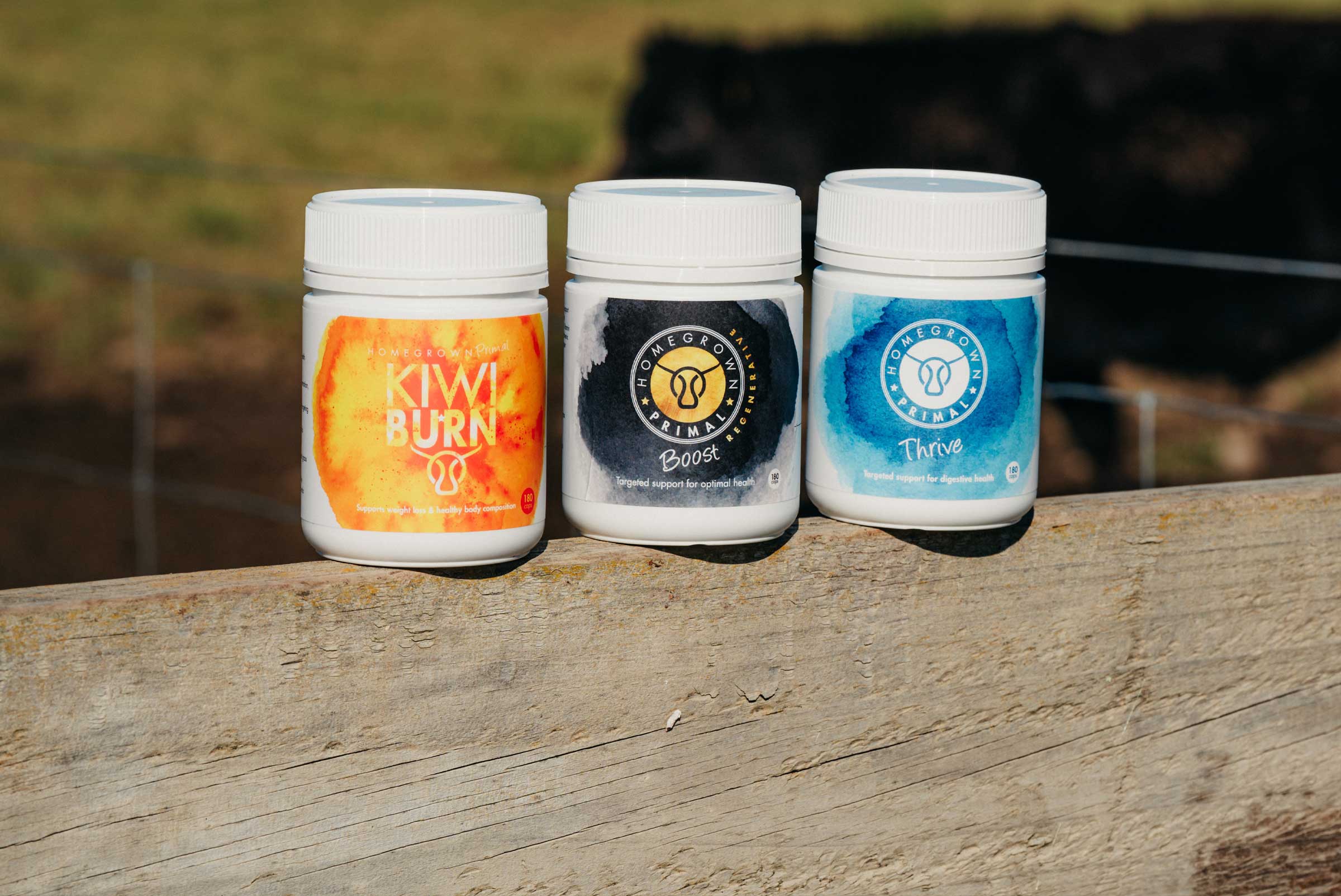
For decades, we've been told that fitness runs on carbs, powders, and seed oils. But nature says otherwise. Real cellular, muscular, and mental strength are built on animal fats.When you train like a carnivore, you're not just working out your body; you're restoring the energy systems your ancestors thrived on. At Homegrown Primal, we believe fitness begins with your metabolism, not your macros. And to fuel that fire, there's nothing cleaner or more powerful than the fats nature designed for humans: beef liver, organ blends, tallow, bone marrow, and brain are all full of species-appropriate nutrients. What Makes Saturated Fat The Ultimate Fitness Fuel? Modern diets have demonised saturated fat, but science says otherwise.In 2018, researchers published a Nature Communications study showing that stearic acid (C18:0), a major component of animal fats, literally activates your mitochondria, the powerhouses of your cells. Within hours of consumption, subjects experienced mitochondrial fusion, a process that boosts fat burning and energy production. In primal terms: Stearic acid wakes up your metabolism It helps your body burn fat cleanly and efficiently It builds endurance from the inside out Kiwiburn delivers this exact fatty acid profile, rich in stearic and palmitic acids, tested at over 40% saturated fat content. These aren't empty calories. They're structured energy, the kind your body was built to thrive on. Why Does True Training Start Inside Your Cells? Most people focus on the gym. Few train their cells. Your mitochondria decide how efficiently you produce energy, recover, and burn fat. When powered by saturated fats instead of seed oils, they perform cleaner and stronger, like running your engine on premium fuel instead of sludge. This is where Ignition and Kiwiburn come in: Ignition is rich in phospholipids, especially phosphatidylserine (PS) and phosphatidylethanolamine (PE), vital for brain and muscle cell membranes. Kiwiburn delivers stearic-rich fats and micronutrients that regulate hormones and rebuild tissues. Together, they don't just feed your muscles, they feed your entire system. Why Should You Skip Nuts, Seeds, And Powders? Nuts and seeds may look "healthy," but in nature, they're naturally defended. They are also often grown in mono-crop environments where sprays are used. They're loaded with anti-nutrients like phytic acid, compounds that can bind minerals and block absorption. For athletes, that means slower recovery and weaker performance. Animal-based fats are different. They're bioavailable, mineral-rich, and free from plant defence chemicals. That's why our philosophy is primal and simple: Skip the nuts. Eat as nature intended. Train like a carnivore. How Do Animal Fats Support Recovery And Hormones? Training hard is easy. Recovering well is the art. Essential fats like stearic acid support: Hormone production (testosterone, growth hormone) Joint health and tissue repair Inflammation control and recovery When your mitochondria burn clean animal fats, you recover faster, think sharper, and perform stronger, without the crash. So, Why Train Like A Carnivore? Because fitness isn't about chasing calories or macros, it's about aligning your fuel with your biology. Animal fats aren't the enemy; they're the original endurance fuel. So next time you hit the gym, the trail, or the barbell, remember: You're not just building muscle, you're reviving a primal metabolism. You're training like a carnivore. FAQ's To Train Like a Carnivore Is Saturated Fat Actually Good For Fitness? Yes, when it comes from natural animal-based sources like beef tallow, saturated fat enhances metabolic health. Essential fats like stearic acid activate your mitochondria, your body's engines, to increase endurance and improve fat burning. Unlike seed oils, these fats burn clean, support hormones, and provide long-lasting power. What Makes Stearic Acid Different From Other Fats? Stearic acid is unique. It's the only known fat that signals your body to fuse mitochondria, improving energy production and fat metabolism It's found abundantly in beef tallow (Kiwiburn) and beef brain (Ignition). This is energy your body recognises. Can Animal Fats Improve Recovery After Workouts? Absolutely. Healthy saturated fats support hormone balance and help repair cell membranes. Ignition provides phospholipids that enhance neural recovery and reduce inflammation. Should I Replace Carbs With Fats For Energy? You don't have to cut carbs completely. When you do exercise that requires fast anaerobic activity, carbs are the body's preferred fuel for performance. Here, fruits or honey may support your training. But you should reclaim fat as your primary fuel. When your metabolism runs on animal fats, you gain metabolic flexibility, the ability to burn both fat and glucose with ease. That means no crashes. No slumps. Just clean, primal energy. Which Foods Or Supplements Help Me Train Like A Carnivore? Start with nutrient-dense animal fats and organ-based nutrition: Eggs, meat, and organs. Raw dairy and some supplementation with our products will help you be the best carnivore athlete possible. No powders. No plants. Just ancestral strength in capsule form. When Training Like A Carnivore, We Recommend: Protein and fat for breakfast Cut refined carbs and snacking throughout the day A 10 am - 6 pm eating window Daily walks after meals Train hard. Recover harder. Eat like your ancestors. If you'd like more information about the Carnivore diet, follow the link to our Guide to the Carnivore Diet
Learn more
Embracing Discomfort: The Path to Growth and Resilience
Over time, the extreme temperatures, physical challenges, nutritional discipline and intermittent fasting forged robust, adaptable humans whose bodies and minds were finely tuned to the rhythms of nature.
Learn more