When Does Vitamin A Become Toxic?
For most healthy adults, eating liver once or twice a week is very unlikely to cause vitamin A toxicity.
Vitamin A toxicity almost always occurs from:
- Taking large doses of retinol supplements over many months.
- Eating unusually large amounts of liver every day.
- Consuming liver from animals such as polar bears or seals, which contains extremely high concentrations of vitamin A.
How Much Vitamin A is in Beef Liver?
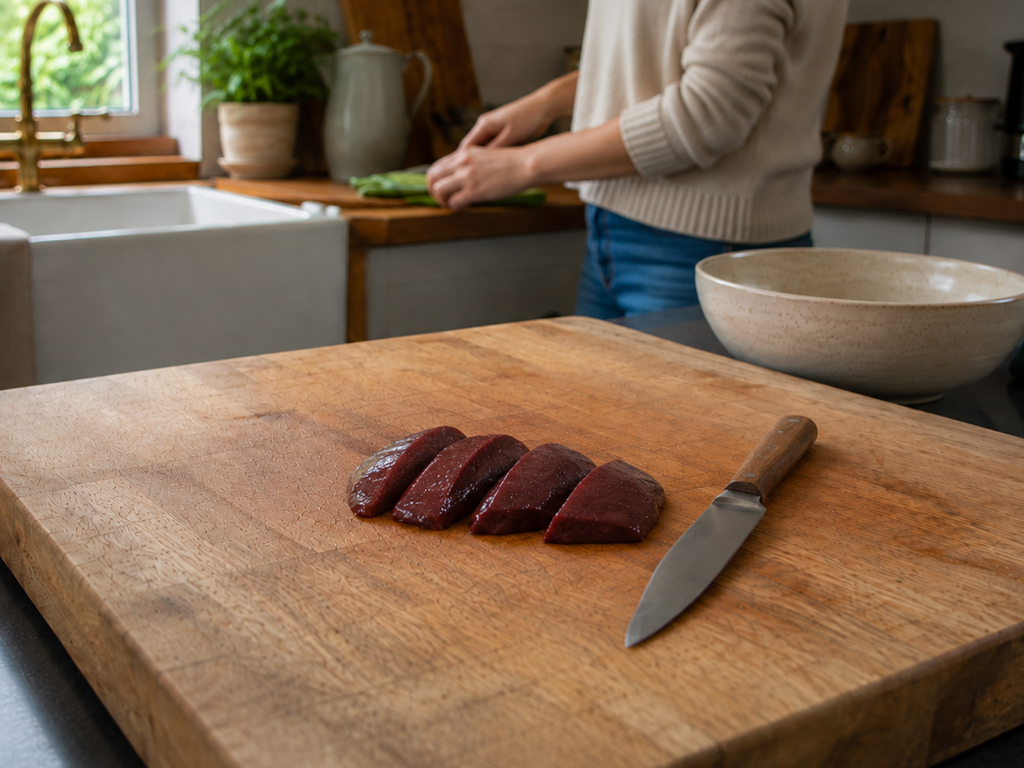
A typical 100g serving of beef liver contains approximately:
- 6,000-9,000 µg RAE (Retinol Activity Equivalents) of vitamin A
- Around 20,000-30,000 IU of vitamin A
Freeze-dried liver is simply dehydrated. This means the vitamin A is concentrated by weight but the total amount is not increased.
As a general guide, around 30 g of freeze-dried liver is roughly equivalent to 100g of fresh liver.
What is the Recommended Daily Intake of Vitamin A?
The recommended daily vitamin A intake for adults is approximately:
- Women: 700 µg RAE/day
- Men: 900 µg RAE/day
So a single serving of beef liver provides several days' worth of vitamin A.
That's perfectly normal because humans have evolved to store vitamin A in the liver and use it over time, rather than needing the exact same amount everyday.
When Does Vitamin A Intake Become a Concern?
The European Food Safety Authority (EFSA) and US National Academies consider the tolerable upper intake level (UL) for adults to be:
3,000 µg RAE per day of preformed vitamin A.
However, it's important to understand what this figure means.
The upper intake level assumes daily, long-term intake. It is not intended to suggest that an occasional nutrient-dense meal containing more than this amount is automatically harmful.
For example:
- Eating 100 g of liver once a week is generally not considered problematic for healthy adults.
- Eating 100-150 g of liver every day for months could eventually lead to excessive vitamin A stores.
The frequency and duration of intake matter just as much as the amount consumed at one meal.
What Are the Symptoms of Chronic Vitamin A Toxicity?
When vitamin A intake remains excessively high over long periods, symptoms may include:
- Headaches
- Dry or peeling skin
- Hair loss
- Bone pain
- Joint pain
- Liver abnormalities
- Nausea
- In severe cases, increased risk of fractures
These symptoms are generally associated with sustained, excessive intakes rather than normal dietary consumption.
What Do Animal-Based Doctors Say About Liver Intake?
Dr Shawn Baker
Dr Baker generally recommends liver as a nutrient-dense food but doesn't advocate eating large quantities daily. He often suggests eating it according to preference, commonly around once a week or in moderate amounts if using freeze-dried supplements.
Dr Paul Saladino
Paul Saladino has also moderated his recommendations over time. Earlier, he ate liver daily; more recently, he has said that small amounts, roughly 15-30 g fresh liver a few times per week (or the equivalent in freeze-dried form) are sufficient for most people because vitamin A is so concentrated.
Dr Paul Mason
Dr Mason emphasises obtaining nutrients from whole foods rather than relying on synthetic supplements. He notes that liver is one of nature's richest nutrient sources but generally doesn't recommend excessive daily consumption.
How Homegrown Primal Liver Capsules Help Control Serving Size
One advantage of taking freeze-dried liver capsules is that the serving size is controlled.
This provides a consistent amount of liver without requiring customers to estimate portions or consume very large servings.
A balanced nose-to-tail organ blend also provides a variety of organ meats, more closely reflecting the range of foods traditionally consumed as part of an ancestral diet.
Liver, Vitamin A and Pregnancy
Pregnancy is one situation where extra caution is warranted.
Health authorities advise pregnant women (or those planning pregnancy) to avoid consuming large amounts of liver because high intakes of preformed vitamin A during early pregnancy have been associated with an increased risk of birth defects.
For this reason, it's sensible for pregnant customers, or anyone planning to become pregnant, to discuss liver supplements with their healthcare professional.
A Practical Guide to Eating Liver Safely
For most healthy adults:
- Eating 75-100g of beef liver once a week is generally considered safe and highly nutritious.
- Freeze-dried liver capsules taken according to the manufacturer's recommended serving are well within the range commonly used in ancestral nutrition.
- Vitamin A toxicity from liver is uncommon and almost always involves sustained, excessive intake over many months rather than normal dietary use.
The Bottom Line: Is Liver Safe to Eat?
Liver is exceptionally nutrient-dense, which is why portion size and frequency matter.
For most healthy adults, eating liver in sensible amounts - or taking freeze-dried liver capsules according to the recommended serving - is unlikely to cause vitamin A toxicity.
More isn't necessarily better. But liver is also not something to fear when it iS consumed in sensible amounts.